


.svg-6af5dfb7ccef8f01d163f9ebdf2f0df6.svg)


October - the month when fall comes into full swing. The leaves are changing colors, there is pumpkin spice everywhere, retail establishments are filled with the combination of Halloween and Christmas decorations, and it is World Menopause Awareness Month. Maybe scientists have discovered that pumpkin spice is the perfect elixir to ease the confluence of aggravating symptoms that accompany the years preceding and following menopause.
World Menopause Awareness Month was begun in 2009 as a joint designation between the World Health Organization and the International Menopause Society as a way to raise awareness and perhaps dispel some old wives’ tales about this normal part of a woman’s aging process.
At some point in her life, almost every woman goes through menopause, with a period of endocrine changes lasting anywhere from a few months to several years leading up to the end of her menstrual cycle, followed by the transition to the postmenopausal years. During this time, levels of female hormones begin to fluctuate radically and then diminish, leading to a broad range of symptoms. These physiological changes surrounding menopause can bring relief, joy, and a fond farewell to a monthly menstrual cycle, or they can result in life-altering mood swings, joint pain, fatigue, weight gain, and hot flashes. Ironically, this phase of life often comes at a time when many women are in their prime. Perhaps the children have entered adulthood and are out on their own, or career goals are reaching their pinnacle, or maybe it is a time of new beginnings. Anyway you look at it, the period (no pun intended) of time surrounding menopause can disrupt life, just when it is about to get calmer and more enjoyable, or at least more predictable.
As women, almost all of us will experience menopause in one form or another. That is a huge support group to learn from, and in today’s connected world, there are ways for us to connect with other women who are undergoing some of the same challenges. In the meantime, there are some basics of self-care that can provide a strong foundation to prepare us for those changes that might be just around the corner.
It is during this time that attention to diet and exercise becomes imperative. Throughout life, nutritional needs for both men and women change as part of the aging process, and these nutritional needs become even more important as we enter our more mature years when our bodies become less efficient at using nutrients to rebuild and maintain healthy tissue. And for most women, just as we are approaching the beginning of our senior years, the hormonal changes also begin, perhaps indicating that it might be time to hit the big reset button on diet and exercise. But to quote an old idiom, “therein lies the problem”. Should we concentrate on the symptoms that accompany menopause, or instead implement lifestyle modifications that can help us stay healthy, active, and vibrant throughout midlife and beyond?
Aging in general and menopause, specifically, is associated with an increase in the prevalence of several health challenges[i], including cardiovascular disease, arthritis, obesity, metabolic syndrome, digestive issues, and osteoporosis. In some ways, these are all interconnected and there are lifestyle modifications that can help reduce the risks of facing one or more of them. For example, the decrease in estrogen levels that accompanies the time preceding menopause is associated with a reduction in lean body mass and, unfortunately, an increase in fat mass.[ii] This change in the composition of muscle to fat is associated with an increased risk of cardiovascular disease; and depending upon how the fat is distributed in the body, an increased risk of metabolic syndrome and Type II diabetes. Small dietary changes, such as increasing lean protein consumption balanced with a plant-forward diet can help tremendously. Not only can this type of diet help increase protein availability in the body, consuming more vegetables and fruits along with whole grains can help increase the intake of fiber, antioxidants, vitamins, minerals, and healthy omega fatty acids.
For many women, diet alone may be insufficient to provide the necessary nutrients, especially as the body is stressed around menopause. One reason that this occurs is because of inefficiencies in the digestive process that occur as we age. Acid reflux, constipation and/or diarrhea, and poor nutrient absorption all increase as we age, and women are particularly susceptible to age-related digestive challenges. Sometimes it seems that estrogen and progesterone must exert an effect on everything in a woman’s body, as the decreases in these hormones seem to impact every process, including digestion.[iii] Maintaining a healthy gut throughout life, including encouraging the beneficial microorganisms that inhabit the gut can make a huge difference in how we feel and how well we handle some of the other challenges of aging.
Supplementing with a good digestive probiotic or postbiotic, increasing consumption of high fiber and fermented foods, and including a selective prebiotic into the mix can be especially helpful in maintaining healthy digestion. Some prebiotics, such as Bimuno®, which contains galactooligosaccharides (GOS), can fill in several gaps in supporting GI health and helping to keep the good gut microbes happy. Bimuno can help reduce GI discomfort and gas[iv] as well as help increase the abundance of healthy Bifidobacterial species in the gut.[v]*
To avoid weight gain and/or compensate for digestive issues associated with dairy consumption, many women avoid dairy foods and may need to support the nutrients usually obtained from dairy. A high-quality bone support supplement containing not only calcium, but also magnesium, vitamin D3, vitamin K2, and possibly additional nutrients can help fill in these nutrient gaps. However, calcium supplementation can be a double-edged sword, as high dose calcium, especially if taken all at once, can have cardiovascular side effects. Selecting a form of calcium, such as ESC® brand eggshell calcium, and taking it along with other bone support nutrients in a dose of around 600 mg/dose twice daily can help support optimal bone health.* ESC is a natural source of calcium that is not susceptible to high heavy metal content. It also contains trace minerals and transport proteins to ease digestion and facilitate absorption of this important nutrient.[vi]
One nutrient group that we might all need to supplement as we get older, especially postmenopausal women, is omega fatty acids, particularly omega-3, but also certain omega-6 fatty acids. Omega-3 fatty acids are considered anti-inflammatory, cardioprotective, and exhibit insulin-sensitizing effects.*[vii] Omega-6 fatty acids overall have a pro-inflammatory effect, and the body needs the inflammatory process to help isolate injured tissue and facilitate healing. Ideally, we would ingest omega-3s and omega-6s in our foods in a ratio of about 1:4 to maintain a balance in the inflammatory process and support the many processes that depend upon these vital nutrients.
Unfortunately, the Western diet is heavily skewed toward omega-6, with most of us consuming a diet with a ratio of omega-3 to omega-6 of 1:15 or worse, most of it in the form of linoleic acid (LA). LA is an essential fatty acid, meaning it must be obtained in the diet, but it is possible to ingest more than the body can metabolize effectively. If LA doesn’t metabolize as it should into other beneficial omega-6s, such as the anti-inflammatory omega-6s, gamma linolenic acid (GLA) and dihomo-γ-linolenic acid (DGLA), a chronic inflammatory state can result. Adding high omega-3 foods, such as fatty fish, to the diet can help, as can supplementation with specific omega-3s, such as DHA and EPA, commonly offered in the form of fish oil supplements. However, a more balanced option for health, and one that is better for the environment, might be a plant-based multi-omega, such as Ahiflower® seed oil. This unique ingredient naturally contains multiple omega-3s, such as alpha-linolenic acid (ALA) (also an essential fatty acid) and stearidonic acid (SDA), both of which are crucial for the body to produce EPA and DHA. And Ahiflower also contains the beneficial omega-6, GLA, as well as oleic acid, a valuable omega-9 normally associated with olive oil. Ahiflower seed oil provides critical omega fatty acids to benefit our body’s own fatty acid metabolism!
Diet alone is usually not enough to keep any of us healthy. We need to keep our bodies moving. Even moderate exercise can be immensely helpful as we age, and for women transitioning through menopause, it can be even more important for both mental health and physical health. But once again, waning hormones come back to bite us. Postmenopausal women tend to have more joint pain than their premenopausal counterparts, even if they don’t have arthritis. Starting and then sustaining an exercise regimen can be difficult under the best of circumstances. If that first thirty minutes of the StairMaster® causes stiffness and pain the next morning, it might be tempting to give up the goal of getting in better physical condition.
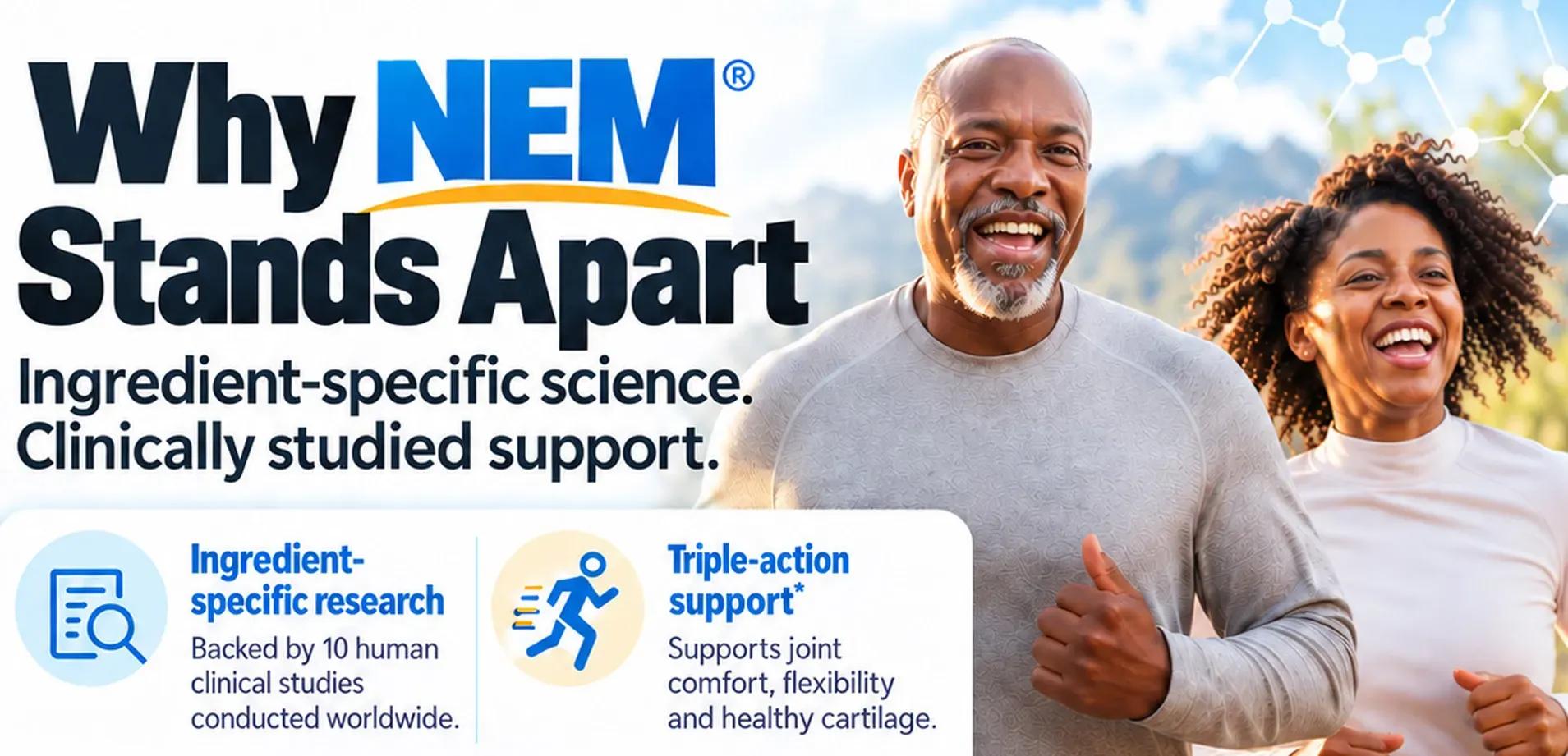
This is another area where omega fatty acids can help as can ingredients such as curcumin that have anti-inflammatory attributes.* However, there is one ingredient that is almost tailormade for postmenopausal women. NEM® brand eggshell membrane is a joint support ingredient that has been studied in sedentary postmenopausal women beginning a new exercise regimen.[viii] This ingredient was shown to benefit postmenopausal women beginning a new exercise by decreasing both the discomfort immediately following the exercise and the delayed pain and stiffness that hits about 12 hours later, compared to a placebo.* In addition, compared to the placebo, NEM significantly reduced a critical biomarker used to detect both temporary and ongoing joint cartilage breakdown. This is significant because if there isn’t as much pain and stiffness following those initial days after beginning a new exercise program, we are more likely to stick with the exercise and reap its benefits.
Just like in many other aspects of our lives, sometimes we should embrace the inevitable. Instead of dreading the potential for embarrassing hot flashes and unwanted weight gain, perhaps we should concentrate on the money we can save from not having to purchase menstrual hygiene products. Go ahead and buy those new shoes instead. Relish your career or set some new life goals. Celebrate World Menopause Awareness Month with gusto. With a few lifestyle adjustments, the postmenopausal years can be some of the best years of life, and Stratum Nutrition® is here to provide the right ingredients to help make it happen.
*These statements have not been evaluated by the U.S. Food & Drug Administration. This product is not intended to diagnose, treat, cure, or prevent any disease.
As interest in eggshell membrane collagen continues to grow
As consumers increasingly seek convenient, outcome-focused wellness solutions
For Stratum Nutrition, industry events are about more than being present;